Thursday, 22 July 2010

The hyper-social organisation


    I’ve been listening to Francois Gossieaux and Ed Moran talking about their new book, The Hyper-Social Organisation (which I’ve not read as yet).  This is another of those books which made by heart skip a beat when I found out about it (“oh no, someone’s written my book!”).  But no, once again, they haven’t.

It sounds like a good book though – I like the idea of web 2.0 and human 1.0 ie that a lot of social media behaviours are triggered by our social brains.  I agree that if you want to understand what’s happening, you’re best of understanding the human 1.0 rather than the web 2.0 tools.

So you need to understand these 1.0 behaviours which seem to fly in the face of logic or you get lost in the tools.  Examples:

  • Reciprocity – people are prepared to make an investment with no expectation of a return - as a human 1.0 hard-wired reflex
  • Fairness – people will pay a price to ensure that fairness is done, ie that everyone does what they say they’re going to do
  • Emulation – our mirror neurons drive us to do the same and to look the same as other people
  • Buyology – we lie to people because we lie to ourselves to to make ourselves look good (we make up excuses for why we’ve made purchases etc)
  • Herding – we combine with and follow tribes (leading to increasing emphasis on the head of the power curve, not the long tail)
  • Status – allows us to progress and be respected within a community, but it can be stultefying too.


Hyper social organisations are those businesses which are being successful because of their use of social media.  They think differently about their business, and are doing things differently too.

These companies recognise that the human with all his (or her) socialness is coming back into business – as employees and everywhere else.  They understand that hierarchies and legal employee processes are becoming increasingly less important, and that communities crossing these vertical lines based upon passion and social factors are becoming more important.

These companies also change their business processes into social processes – things which are done by people because they want to, they have a passion for something etc.  This way of working is about using human reciprocity and social contracts to get others to help you do your job.  Just about every process (apart from Finance and Legal) is socialisable (or social mediafiedable!).

One idea if you want to become a hyper-social organisation: don’t put a firewall between your people and your company eg by forbidding people to tweet- they’ll just do it on their iphones anyway.  And anyway, two research studies have shown that people using social media are more, not less, productive.


Some thoughts

I go along with a lot of this, particularly the important of socialisation.  That’s what this blog’s about, and also my next book.

And I support some of the authors’ recommendations

  • Eg: to think about human-centricity (as in human capital management), not company-centricity.
    • Yes: companies need to become human before they can become social.
  • And also: think knowledge network, not information channel.
    • Yes: that’s a basic tenant of social media – it’s about the conversation not a communication.
  • And to an extent: think emergent messiness, not hierarchical fixed processes.
    • Partly: emergence is important, but there’s a lot of this you can plan as well (I’ve just been having a conversation about this in the comments to my last post about Enterprise 2.0 on Strategic HCM).


What I don’t like so much, or why my own book is still going to be different to (and better! than) this one is that I don’t see, once again, why all this needs to be so linked to social media.  Basically, it doesn’t.  Social media has given us one more enabler to influence these social (human 1.0) factors, but these exist in all workplaces.  2.0’s largely an irrelevance to this.

Also: I think we need to move away from descriptions of the environment.  This is where so many books go wrong.  There are just too many descriptions of ways that people in companies can think differently, and things that they can do.  Too many to have much of an impact in my view.

We need to switch the focus to outcomes – to what we’re really trying to achieve based upon our increasing understanding about the social workplace.  And this isn’t to think tribe.  Finding groups of people who have something in common based on their behaviour may be something we want to do, but only if it achieves something else.

Social Advantage anyone?


  • Consulting  - Research - Speaking  -  Training -  Writing
  • Strategy   -  Team development  -  Web 2.0  -  Change
  • Contact  me to  create  more  value  for  your  business
  • jon [dot] ingham [at] social [dash] advantage [dot] com

.

Thursday, 15 July 2010

Enterprise 2.0 summary


   I still need to catch up on quite a few posts from the Enterprise 2.0 conference in Boston.  I captured them live in draft but didn’t get time at or since the conference to publish.  They will out before the end of the month!

Of course, you will find commentaries on all the sessions elsewhere, but I hope you’ll value my additional insight built into the posts as well.

And I thought I’d give you a summary of some of these insights, in terms of my major overall reflections on some of the key themes and debates at the conference.


Culture and tools

There seemed to be a significant split in attendees / perspectives between a focus on on culture, and a focus on technology.  I’m not saying anyone thought culture was unimportant – that certainly wasn’t the case, but it’s about prioritisation.  Some people clearly understood that culture (the way people work together, collaborate etc) is the most important element in e 2.0.  At the other end of the scale, there was a view that we’ve reached the end of the ‘culture 2.0 crusade’.  I believe this focus is important, and suggest it does need to be on culture.

I’ve got another draft post on this which I’ll be posting here shortly as well.

And I’m proposing to speak on this subject at the next e 2.0 conference in Santa Clara in November.


Creating and adding value

A further issue was around the role of e 2.0 in bringing around changes.  The prevailing train of thinking suggested that e 2.0 technologies need to be embedded in business processes, and what people do within their jobs.  Ie that 2.0 adds value to existing processes to help them and the people performing them work effectively.  Or maybe that 2.0 can create value, ie help people and organisations do new things by applying appropriate innovations faster than elsewhere (as a solution in search of a problem).

To me, its people, and their relationships, that create value.  2.0 technologies play a role in helping them do this.  And most of what people do happens on top of and around business processes.  So if we want 2.0 to create value, to lead change, we need to extend its use beyond the workflow.  We need to focus on peoples’ working-lives rather than just work-flows.

The challenge in doing this is in getting people to do something that goes beyond their narrowly defined jobs.  But this is where the benefit lies as well.

Again, I aim to post on this in more detail.


HR and IT

E 2.0 is not an IT conference, but there were certainly more CIOs and IT Directors than there were people from any other function.  A couple of people and tweets commented on the lack of HR people.

Actually, there were about 15 of us there.  Not a huge number perhaps but the conference agenda is going to have to change to encourage more, eg less headache inducing product demos dressed up as keynotes, and just a broader agenda too – choosing between various social technologies that all do pretty much the same job isn’t to me what 2.0 needs to be about.

But HR is increasingly interested in this.  Or at least in the benefits 2.0 can provide.  To me, it’s just that IT and HR aren’t talking to each other sufficiently.

And we need HR to be part of the conversation.  I try to wear a business rather than an HR had on this blog (my HR blog is Strategic HCM).  But I can’t get away from the fact that if culture vs tools is what’s important, HR should really be the key owner and driver of 2.0 oriented (social) change.

So I’ve got another proposal in for Santa Clara to help IT understand the ping points for HR, and develop a closer conversation between the two functions (and I’d like to do one focusing in reverse for the CIPD or SHRM).


Best and emerging practices

I felt there also seemed to be growing body of opinion that we all know and share a reasonably similar view about what e 2.0 needs to involve, how best to do it etc.  We don’t (or at least I don’t – see above).

I’d like to see the conference hang back from trying to focus on ‘the solution’ and encourage more diversity in thought (I’d have liked to have seen a few more rather more divergent thinkers like Stowe Boyd and Paula Thornton on the agenda too).

Oh, and a diversity in case studies too.  I’ve already posted on EMC, Cisco, CSC and IDEO and my draft folder includes posts on AXA, IBM, Microsoft, Sony, UBM and Vanguard.  Notice any similarities?  I’d like to see the conference help push interest and usage out beyond the IT sector, even if this means focusing more on current attempts vs successful case studies (actually, I think I’d prefer this anyway).

However, I don’t think getting this diversity is likely.  We all understand enough about ‘culture 2.0’ to know that people link with (and vote for) people like themselves.

So I somehow can’t see myself presenting in Santa Clara!?


Picture credit: JoJan


Previous posts:


and on Strategic HCM:


  • Consulting  - Research - Speaking  -  Training -  Writing
  • Strategy   -  Team development  -  Web 2.0  -  Change
  • Contact  me to  create  more  value  for  your  business
  • jon [dot] ingham [at] social [dash] advantage [dot] com

.

Friday, 2 July 2010

HCL Technologies - collaborative organisation structures


   I met up yesterday with Vineet Nayar, CEO at HCL Technologies who has just written a book, Employee First Customers Second.

Although most of the book deals with this EFCS approach (human capital management, in my language), the book does touch on the importance of social connection too.

For example, Vineet writes about the power of fusion:

“Once we transfer the ownership of our collective problems for the supposedly all-powerful CEO to the employees, people… suddenly see the company as their own enterprise.  They start thinking like entrepreneurs.  Their energy quotient leaps up.  And when that happens with a critical mass of employees (usually, 5 or 10 percent is all you need) throughout the company, it creates a kind of fusion – a coming together of the human particles in the corporate molecule that releases a massive amount of energy.”

He explains that he is also attracted by the idea of a Starfish organisation – one which is decentralised, with every major organ replicated across each arm.


Vineet’s book describes some of the activities HCLT have already been undertaking to unleash this fusion:

  • A social network called U&I that employees can use to ask questions to Vineet and has since been extended with My Problems – an opportunity for him to share his concerns with HCLT employees.
  • An updated 360 degree review system which allowed anyone to give feedback on a manager and to then see the results of that manager’s 360, replacing zones of control with spans of influence
  • Communities called Employee First Councils around health and hygiene, art, music, corporate social responsibility and dozens of other issues including business related passions such as a particular technology or a vertical domain area, which allow people to enhance their personas at work, brining the whole person, as well as the person’s families, into the culture of the company.
  • My Blueprint, another social networking system allowing managers to share plans for their specific business areas and get feedback from another 8000 HCLT managers, including people above and below them in the hierarchy.


I asked Vineet if there were any other actions HCLT is taking or has planned to further develop its peoples’ connectivity:


Stars and Spheres

Vineet described three organisation structures.

The first is the traditional pyramid with its apex at the top.  This is the sort of organisation developed armies when the Commander realised he was only 1 soldier in 500 soldiers so began enabling people down there at the bottom of the pyramid. It was also the organisation structure in the HCL Technologies organisation – they forgot that organisations needs commitment to work and created an HR organisation.

The second model is an inverted pyramid which reflects the value of work that’s undertaken. There is value in both of these two pyramids eg there’s still value in hierarchy.  You need a control structure – it’s when this assumes control over things you can't control that you get a problem).   So you put the two pyramids together and end up with a star in which a manager is accountable to their employees and the employees to the organisation.

In the third model (pictured), the organisation starts engaging every employee in the star organisation – in which employees are involved in 8 or 9 activities related to their own interests so you have these concentric circles around employees.

In the future, if we were to have this conversation again in another 5 years, Vineet suspects he will be drawing a sphere in which these communities have assumed more importance than either of the pyramids.


Social change

We talked a little about Social Advantage too.  Vineet suggested that my thinking around the value in connections, not the individual alone, but about collaboration of employees creating value, is absolutely right.

But he also suggested a need to turn theoretical idea to practical issue happening now.

For him, this is about the growth of emerging markets and therefore changes in the demographic pool of customers – becoming younger, based in emerging economies, with girls doing better than boys.  Everything is changing.

Peoples’ influence zones are changing – because of things like Facebook.  Advertising no longer influence what, how or where consumers buy.

Communities are now behind buying decisions.  It’s a very important change.  People are only just finding out how to engage communities to come and buy products.  How do you influence people to take things back into communities of value?

50% of the world are now under 25 years old.  This means we need to learn to create value through collaboration, through communities like Facebook.  In the future, this will be the only way that business will be able to grow.


Also see my post on HCLT’s employees first approach at Strategic HCM.

And you can read Vineet’s blog posts at vineetnayar.com or blogs.hbr.org.  You can follow him on Twitter at @vineetnayar.


  • Consulting  - Research - Speaking  -  Training -  Writing
  • Strategy   -  Team development  -  Web 2.0  -  Change
  • Contact  me to  create  more  value  for  your  business
  • jon [dot] ingham [at] social [dash] advantage [dot] com

.

Thursday, 1 July 2010

Looking back to July 2009


   This July, I’ll be continuing to catch up on the rest of my posts from the E 2.0 conference in Boston, and I’m sure there’ll be lots more posts besides.
You may also be interested in these posts from July last year:


Or even from the year before?


Picture: Crowds gather on the ghats for the eclipse in Varanasi, India


  • Consulting  - Research - Speaking  -  Training -  Writing
  • Strategy   -  Team development  -  Web 2.0  -  Change
  • Contact  me to  create  more  value  for  your  business
  • jon [dot] ingham [at] social [dash] advantage [dot] com

.

Wednesday, 30 June 2010

Chasing Stars and Socialism


   I didn’t manage to do any posting on the World Cup prior to England’s demise (I was leaving it to the finals!) although I did manage one tweet during the match we did play reasonably well in (can’t remember who it was against now which shows how much I like football):

“How can a team of people perform so differently at different times? #england (the value of performance improvement vs performance management”


I was really just thinking about how much peoples’ performance can change in a short period of time, and the range of subjective and intangible factors which contribute to the difference.  Hence performance improvement.  And then contrasting this with measuring and ‘managing’ performance (as in performance management) which I don’t think can contribute as much.

But I could have been referring to the performance of the team, as I think all those factors that make performance improvement difficult for individuals and magnified significantly for a team.  I though this article by Lane4 in Human Resources magazine summed it up quite well.

But not as well as this (from the Evening Standard):

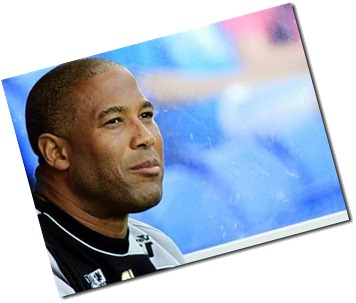
“According to former England winger John Barnes, South American success and Fabio Capello's failure in South Africa can be explained by one thing. Socialism.

"Football is a socialist sport," he explains. "Financially, some may receive more rewards than others but, from a footballing perspective, for 90 minutes, regardless of whether you are Lionel Messi or the substitute right-back for Argentina, you are all working to the same end.

"The teams which embrace the socialist ideology rather than having superstars, are the teams that are successful. Or if there are superstars they don't perceive themselves to be that. That's why I use Messi as an example. As much as he's a superstar he respects his team-mates and their collective efforts."

"Players from other nations when they play for their country are once again a socialist entity, all pulling in the same direction," he tells me from a dressing room at Supersport's studios where he is an expert analyst on the World Cup. "The most important thing for every Brazilian player is to play for Brazil.

"It doesn't matter if he plays for Milan or Manchester United. A Brazilian who puts on that yellow shirt feels the same as the man next to him in that yellow shirt. They have a humility to the shirt. It is not the same for those who wear the Three Lions."

For Barnes, the answer is simple.Whether Capello remains in charge or not, England have to start playing as a team and lose the tag of the Golden Generation.

"We have empowered our players so much that they are superstars at their clubs. Too many have been put on pedestals and treated as untouchable.

"Look at John Terry after the Algeria match. He comes out and tells you what the problem is. But he doesn't see himself as part of the problem."

"Spain has an identity. If you black out the faces and don't know who's playing, you can still say this Spain because of the way they play. You can see Brazil because of the way they play. We haven't got a method. We need to create an identity."


It’s not that new a point (think the Real Madrid Galacticos) but it’s the most intelligent thing I’ve heard a footballer, or many a business leader, say.

And that’s why I want to do this post.  I think the general points that John Barnes makes apply just as much to business as they do to footballers – we’ve been chasing superstars as well.  And there’s a lot of evidence to suggest this works just as poorly in business as it does in football.

The best of this come from Boris Groysberg and I’m currently reading his new book, Chasing Stars.

You probably realise that I’m an avid reader, but I’ll admit I’m finding this book quite hard going and unless you’ve got a really deep interest in this research, I’d stick to Groysberg’s SMR article ‘When Stars migrate, do they still perform like Stars?’, or even just this blog post by Bob Sutton.

Basically, the research suggests that stars are only stars because of the context they work in and particularly the network (or team) that backs them up.

So do we need a more socialist approach in business too?  You’ll probably know my answer because that’s largely what this blog’s about!  But I’d be interested in yours as well.


Also see these recent posts:


  • Consulting  - Research - Speaking  -  Training -  Writing
  • Strategy   -  Team development  -  Web 2.0  -  Change
  • Contact  me to  create  more  value  for  your  business
  • jon [dot] ingham [at] social [dash] advantage [dot] com

.

Monday, 28 June 2010

HR and Communities (Talking HR 029)


   Yes there was a reason why I suddenly did those two posts on communities (1, 2): so that I could refer to them in tonight’s podcast on the role of communities, their importance, their management (or facilitation!), and also on the HR function’s role in supporting them (see this post at Strategic HCM).

For this show, Krishna and I were joined by Claire Boyles from Management Matters.  Thanks a lot, Claire, it was great speaking with you.

You can listen to the archive here.


Picture: Community Maturity Model from the Community Roundtable


  • Consulting  - Research - Speaking  -  Training -  Writing
  • Strategy   -  Team development  -  Web 2.0  -  Change
  • Contact  me to  create  more  value  for  your  business
  • jon [dot] ingham [at] social [dash] advantage [dot] com

.

Enterprise 2.0: Social Media and Community


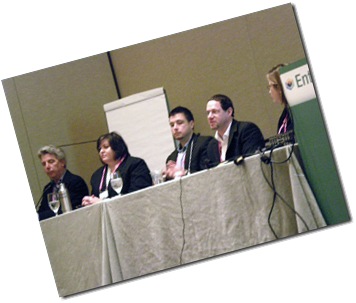
   The second session on communities was a panel led by Rachel Happe, Principal at the Community Roundtable and featuring:

  • Eran Barak, SVP, Global Head of Community Strategy, Thomson Reuters
  • Matt Johnston, VP of Marketing and Community, uTest
  • Michael Petillo, Enterprise Sales & Marketing Systems Leader, W.L. Gore
  • Megan Murray, Community Manager/Project Coordinator, Booz Allen Hamilton


The terms social media and community are often used interchangeably but they are not the same thing. One has a heavy emphasis on social content and the other is focused on building a tight network of relationships. So which approach is the most appropriate? It depends a lot of the type of relationships desired with the targeted constituent group. It also has a huge impact on operations -- tools, integration needs, policies, processes, and the management techniques employed. Come find out why this distinction matters and learn how three different types of companies are approaching the challenge of socializing their organizations.


Supporting the earlier workshop, the panel agreed that the word Community tends to be used too freely.  Communities aren’t just loosely affiliated groups.  There’s a difference between a crowd and a community – communities have deeper levels of connection and trust.

However, the key focus of this session, for me at least, was that choices re community depend on the context – whether the situation is B2B. B2C etc.  There are lots of choices but no right answers.


Eran Barak discussed Thomson Reuters support for tons of microcommunities (300k members in 6000 companies) all with different needs that the company is bringing together for content and expertise, forming an ecosystem

Matt Johnston talked about his community of 30,000 software testers that basically form the uTest business.  Community management is critical but they only have 2 people to manage it.

Michael Petillo explained that Gore has a social organisation the introduction of technology. It has a unique culture which influences all of their interactions internally with other associates and externally with partners and customers. It governs how they work together and collaborate.

Megan Murray talked about Booz’ hellobh.com which includes 495 internal communities, 25k people, most outside the building, working in a partnership model (also see my conversation with Thomas Stewart about this).  Booz consultants have different areas of focus but overlapping skills.  However the firm found finding people difficult so it created social spaces to make this happen.  People also come together around a passion or a problem – things they are interested in the most.  You put together new person x and new person y and this may result in a new capability all together.


Some of the key points made by the panelists include:

  • The distance between nodes - how connected and how tight it is - influences how fast the community can move.
  • There is value in lexiconical analysis of what community members are saying – it provides context of what you want to achieve.
  • Managers often worry about people engaging in chit chat.  But often this is part of something else, eg the post mortem of a business transaction  And the chit chat is what leads to trust – not the transaction.
  • You can identify the NPV of a network by how many connection there are, how often people tweet, and by identifying the people who connect one part to another – structural holes, weak ties etc.
  • It’s useful to identify the influencers of broadcasters – the broadcasters don’t have time but the influencers probably do.
  • You can’t be prescriptive - forcing people into groups is a recipe for disaster.  When you’re setting up space you can be specific about what needs to get done but allow room for emergence.


You might like to check out the Rountable’s own link to the session – which includes a pic from my own conference proposal (not sure why!): http://community-roundtable.com/2010/06/enteprise-20-conference-2010/.


See my other reviews from the conference at bit.ly/e20conf.


  • Consulting  - Research - Speaking  -  Training -  Writing
  • Strategy   -  Team development  -  Web 2.0  -  Change
  • Contact  me to  create  more  value  for  your  business
  • jon [dot] ingham [at] social [dash] advantage [dot] com

.

Enterprise 2.0: Communities aren’t sites, they’re people


    The first session on communities at the Boston E 2.0 conference was part of the Black Belt Practitioners workshop on the first day:


Community Roles and Adoption Planning (Stan Garfield – Deloitte, Luis Suarez – IBM)
  • Stan is community evangelist for Consulting at Deloitte Touche where he leads the SIKM Leaders Community with over 400 members globally and Luis is Knowledge Manager, Community Builder and Social Computing Evangelist at IBM
  • Communities behind the firewall are groups of people who share specialty, passion, interest, roles, concern, set of problems. Communities are living organisms so very difficult to manage
  • Community members deepen their understanding of the topics by interacting, asking questions, sharing knowledge, reusing ideas, solving problems together, developing better ways to do things
  • People join a community to share, innovate, reuse solutions, collaborate, learn from others


Luis Suarez started the session by explaining that whereas some people feel every group is a community, this isn’t the case.  Communities need a shared passion about a common interest.

Most of the session was the taken up focusing on Stan Garfield’s Communities Manifesto and some of the key points from this, eg that communities should be independent of organisation structure – people shouldn’t be forced to join, so that members want to be part of the community.

I particularly liked this slide examining the differences between communities, organisation sites and teams:


Luis and Stan also provided suggestions for community building programmes.

Firstly, you need to find a compelling topic.  This needs to be made interesting.


Most importantly, communities need to be facilitated, actively nurtured – they won’t necessarily expand naturally.  People set up communities and 2-3 weeks later find them dead - people wonder why.

We need to ask them have you engaged people?  Have you provided the opportunity for the community to have community activities?

Communities need to be nurtured ever day, every hour of the day, by engaging with them and providing a plethora of activities - including physical activities.  Web 2.0 tools aren’t enough.

They need good content to ensure good health but this is only part of the solution.  You need to focus on connections, and help people connect with each other.  Connecting people with content and other people.  Focus on the interactions between people.


One key question is who is going to lead the community – and this could be several people  - these need to have passion for topic and time to build and sustain it.

When selecting a leader it’s useful to watch peoples’ communications.  Who are the hubs / connectors / mavens?  Who do people trust? – go to for advice?

But note, the best conversation leader may not be best facilitator.  So they’ll need coaching and up-front training.  And you can then have a community of community leaders.


Another interesting point was that lurkers are valuable.  Without them, we often wouldn’t have a community.  And they may eventually move from being passive consumers to active producers.


Communities generally manage themselves, ie the “we” eg if people post inappropriate content.  It’s not something the community manager needs to get involved in.


You can never communicate enough about a community, eg communicate to the community what is happening in the community.

And cross-pollinate across communities.


Note, because of the differences on the slide above, particularly I guess the lack of a clear purpose, managing a community takes more effort than managing a team.

However, it is potentially more valuable as well.  Communities provides a reason to stay in the company – they reduce attrition rates.


Of course, as Luis and Stan noted, communities have always been there - for decades.  We all have a very natural need to participate in communities – we want to bond with people.

But I’m not sure they’re often that actively created or managed in most organisations…


I thought this was a really engaging and interesting session.  While the presenters were talking I was thinking about a community that I’ve been ‘managing’ recently – called ‘Moon Shots’ this is a ‘community’ of 250 management regades bought together by an interest in Gary Hamel’s writings on management innovation.

Only it’s not really a community – a result of me not really managing it.  So I’m probably not going to continue it when ning changes its conditions next month. 

Yes, I’ve got the passion, but I’ve been a bit short of time.  And I’ve never really thought that much about my role - so these guidelines from Luis and Stan would have really helped as well.


Slides are available at http://www.slideshare.net/20adoption

Follow my posts from the conference at bit.ly/e20conf.


.

  • Consulting  - Research - Speaking  -  Training -  Writing
  • Strategy   -  Team development  -  Web 2.0  -  Change
  • Contact  me to  create  more  value  for  your  business
  • jon [dot] ingham [at] social [dash] advantage [dot] com

.

Thursday, 24 June 2010

Social branding


  One of the things I want to talk briefly about on tomorrow’s Employer Branding webcast is my idea of ‘social branding’.

I still need to do more thinking around this before tomorrow, but I’m going to suggest that as well as an EVP and employer brand, companies need to think about their ‘Social Value Proposition’ (SVP) and ‘social brand’.

Why?  Because more and more of what we do at work is about our relationships with other people.  It’s why I’ve included ‘people’ as a major element in my EVP model for so long, and why I’ve argued that people and relationships need to be a major focus of engagement surveys.

But it’s more than this.  It’s not just about how organisations treat their people.  It’s how people treat each other.  What’s our offer to our colleagues and others we work with?

And this is different to an EVP because it’s not about what’s done to us, it’s about what we do with each other.

And I suspect it’s going to be an increasingly important enabler for engagement as well as collaboration and productivity.


Of course, I realise this is probably just going to result in increased confusion.  Those who have come across social branding before will link it to either and ethical focus or the simple use of social media.  But hey, there’s nothing I can do about that.


What do you think?  Any ideas for the factors that should be included in a SVP?

Or is this idea just nuts (it’s probably not too late to take out the slide!).


  • Consulting - Research - Speaking  - Training -  Writing
  • Strategy  -  Talent  -  Engagement  -  Change and OD
  • Contact  me to  create more  value for  your business
  • jon  [dot] ingham [at] strategic [dash] hcm [dot] com

    .

  • Thursday, 17 June 2010

    Enterprise 2.0: Sharepoint – an all-or-nothing decision?


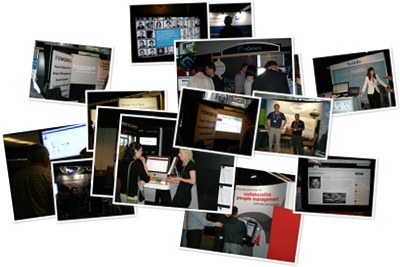
    There’s been a lot of focus on vendors at the E2.0 conference.  From my point of view, too much focus (particularly the product demo ‘keynotes’), although actually still less than I thought there’d be.

    One of the things that has come through very clearly to me has been the degree of overlap between systems.  Walking through the exhibition, I found it fairly difficult to distinguish most of the systems from each other (although if I’d come armed with some specific requirements, I’m sure I would have been able to use these to create a quick shortlist).

    One that stands out is Microsoft’s Sharepoint, particularly the new 2010 release that’s on show here.  The session I’m currently in has concluded that Sharepoint is usually going to be there, for information storing and sharing, but that it’s social features are still quite weak and that there’s little in it to spark conversations (without extensive customisation such as in Microsoft’s own Academy Mobile).

    It’s why Newgator won the Vendor Idol session – given its deep integration with Sharepoint, at least companies can use this and have something decent for users vs IT to use (although all vendors seem to integrate with it to a greater or lesser extent).

    Note, my own experience contrasts with this view.  As an example, I’ve been talking to Unilever who have just implemented Sharepoint gloablly (and only 2007) as a enabler for social change.

    Anyway, it’s clear some of the systems do offer better social features, and are also much more attractive from a user perspective.  Given the fascination over peoples’ ipads here, it’s clear this is the new battleground.

    So my own vote goes to NGenera, a new entrant into the marketplace, with its Space system which was demoed earlier by IDEO who also inputted into its design, which shows.

    Cisco’s new QUAD system looked OK as well and I’m sure will be another powerful new entrant in this space.


    Other than sociability and usability, the other aspect of these systems I thought vendors would have been emphasising, particularly at this conference, would have been their use in socialising the business.

    This is something I’ve thought Jive has done well over the last couple of years, and came over fairly well in the keynote yesterday, although the sales push and loud music detracted significantly from this.  But Jive seems to have outsourced this creative piece to Dachis Group now which I think' is a mistake.

    The two companies that seems to be coming into this space from an earlier focus on HR are Saba and Success Factors.  Saba are rebranding their systems under the banner of Collaborative People Management.  And Success Factors are starting to integrate with their new acquisition Cube Tree – developing what looks like it will be a very comprehensive offer (my only worry is that it will end up being a ‘social ERP’ ie just too big and complicated).

    Anyway, ‘collaborative people management’: that’s what I think these vendors need to be about.


    See more of my posts from the conference at bit.ly/e20conf.


    • Consulting  - Research - Speaking  -  Training -  Writing
    • Strategy   -  Team development  -  Web 2.0  -  Change
    • Contact  me to  create  more  value  for  your  business
    • jon [dot] ingham [at] social [dash] advantage [dot] com

    .